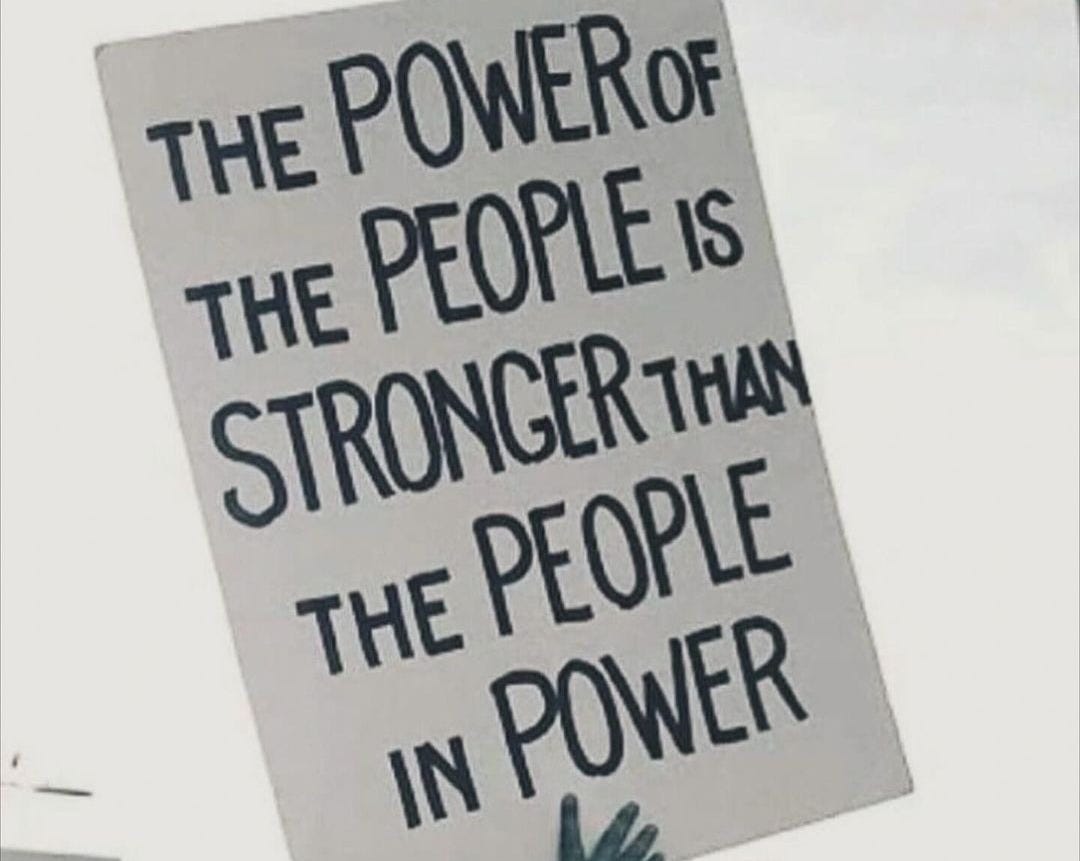

Today’s meditation is a long one: presence, breath, and a contemplative prayer to your Higher Power.
The magnitude of what needs protection in our world often freezes me. When I pray, my mind does not become soothed or lifted. It becomes stunned by how much is in need of protection, repair, and resurrection. The form of prayer I have learned does not remove that weight. It does the opposite. It requires me to come into direct contact with it.
Prayer, practiced this way, does not ask reality to change on my behalf. It asks me to look more honestly. Attention placed prayerfully trains the inner eye to hold both minor transgressions and vast atrocities without collapsing into denial or false consolation. As Richard Rohr has observed, prayer does not so much change what is seen as it slowly changes the one who is seeing.
Sitting inside that contact makes one thing unmistakable: attention is never neutral. It is directional, formative, and consequential. What we give our attention to shapes what is strengthened in us and what withers. Attention can narrow us into reactivity, fear, and destructiveness, or it can open access to conscience, creativity, and care. It does not moralize. It amplifies. How we learn to place attention determines whether it becomes a weapon against ourselves and others, or a tool for repair, authorship, and awakening.
On unchecked days, attention is not spent intentionally. It is pulled, fragmented, and consumed. And yet attention is not a disposable resource. Where it ultimately emanates from remains mysterious, but one fact is observable: enormous economic, political, and cultural power is organized around capturing and directing it. Outcomes change based on where attention flows. It governs whether we live as sovereign, creative beings or as compliant and controllable ones.
For over twenty years, my teaching has gradually organized itself around this understanding. Attention is the training ground of agency and the primary means by which we come into contact with our deeper capacities. Where attention is trained, something in us is strengthened. Where it is abandoned, something essential erodes.
This is partially why I began this long-form audio Substack last year. It is a modest attempt to protect the direction of attention toward what is life-giving, authentic, and interior. When attention is placed this way, consistently and over time, something begins to emerge. A source of orientation that feels both discovered and innate. This is what I refer to as Higher Power.
By Higher Power, I do not mean a belief system, doctrine, or external authority. I mean an internal and intrinsic capacity, one that is simultaneously evolving and deeply still. It is a source of orientation we can resource when our lower, more reactive natures take hold. It doesn’t offer mere reassurance. Often it is the source of discomfort when we step outside of alignment and integrity. It is something we can question, test, dismantle, inhabit, and return to, not for comfort, but for discernment, fortitude, and renewal.
In my experience, Higher Power behaves less like an answer and more like a living question. It offers refuge and internal resource, but demands we act on what we find there. It is not offended by doubt or skepticism. In fact, it seems to require them. Faith of this kind is not fragile. It is forged through interrogation. Any power that cannot withstand the rigor of the mind and the guard of the heart will not endure the paradoxes of this reality. Any power that collapses under scrutiny or exists only as an external authority is not strong enough for the times we are living in.
From over two decades of practice and teaching, one thing has become clear: any spirituality that cannot stand with us in grief, rupture, and moral injury is insufficient for this moment. Consolation without capacity doesn’t work, and any form of transcendence that abandons the human is not transformation.
I won’t attempt to define your Higher Power. That belongs to each person alone. Years of teaching have only confirmed that words always fall short when pointing toward what is essentially wordless. What I offer instead are observations about how it has revealed itself, not as doctrine, but as lived experience.
Higher Power is not something to believe in. It is what emerges as false divisions soften and as exiled parts are allowed back into belonging. Anything we believe about ourselves that is smaller than the truth will eventually be brought into review, not as punishment, but as, perhaps, the point.
It rarely arrives as certainty. More often, it appears as the capacity to continue when you are at the end of your rope. To love without guarantee. To take right action without promise of outcome. To tell the truth even when it dismantles protective masks. Higher Power does not explain atrocity. It prevents numbness in the face of it. It allows us to remain human without anesthesia.
What is uniquely sacred to each individual is not found by escaping the world, but by consenting to be fully present within it. I can say this with authority. Every attempt I have made to bypass reality through avoidance, addiction, fantasy, or spiritual hacks has failed. Not because the world is cruel, but because nothing exists outside of it. Everything, including despair and devotion, is made of the same substance.
Higher Power does not rescue us from reality. It asks us to stay with it. To accept it, question it, and participate in shaping it. Any authority that demands unquestioned belief offers a lazy hope, one that excuses us from responsibility and action. Higher Power does not require belief. It requires participation.
Do not look to Higher Power to extinguish the fires in your life. Look instead for what in you can remain human while the fire burns. Resource that capacity, and from there, do whatever is yours to do to work with the heat.
Higher Power is the source of agency, not its erasure. It feels less like being saved and more like being trusted with the weight of one’s own becoming.
For me, it feels less like a voice and more like a gravity, constantly orienting me back to what matters. It allows no tolerance for the belief that meaning exists somewhere outside of lived experience.
This understanding of Higher Power as participatory rather than passive leads directly to questions of authorship. Not authorship as control or mastery, but as creative responsibility. If Higher Power asks us to participate in shaping reality rather than waiting to be rescued from it, then we must learn how to live inside conditions we did not choose. How to remain faithful to something larger without surrendering discernment. How to act with integrity when external guardrails have collapsed and larger powers no longer model it.
This space will continue to hold long-form writing and audio. Practices that stretch attention rather than fracture it. Inquiry that does not rush toward resolution.
If I place my trust anywhere, it is in this: that attention still shapes outcomes. That honesty still carries weight. That care still alters what is possible. That remaining in contact with reality, even when it is difficult, is not passive endurance but active devotion.
The fires will continue to burn. The question is not whether we can extinguish them, but whether we can remain human in their presence. Whether we can direct our attention toward what is worth protecting. Whether we can author our lives with integrity when no one is watching and nothing is guaranteed.
May we work not to transcend reality, but to meet it fully. Not to be saved, but to be capable. Not to find meaning elsewhere, but to create it here and now.
Love,
A